
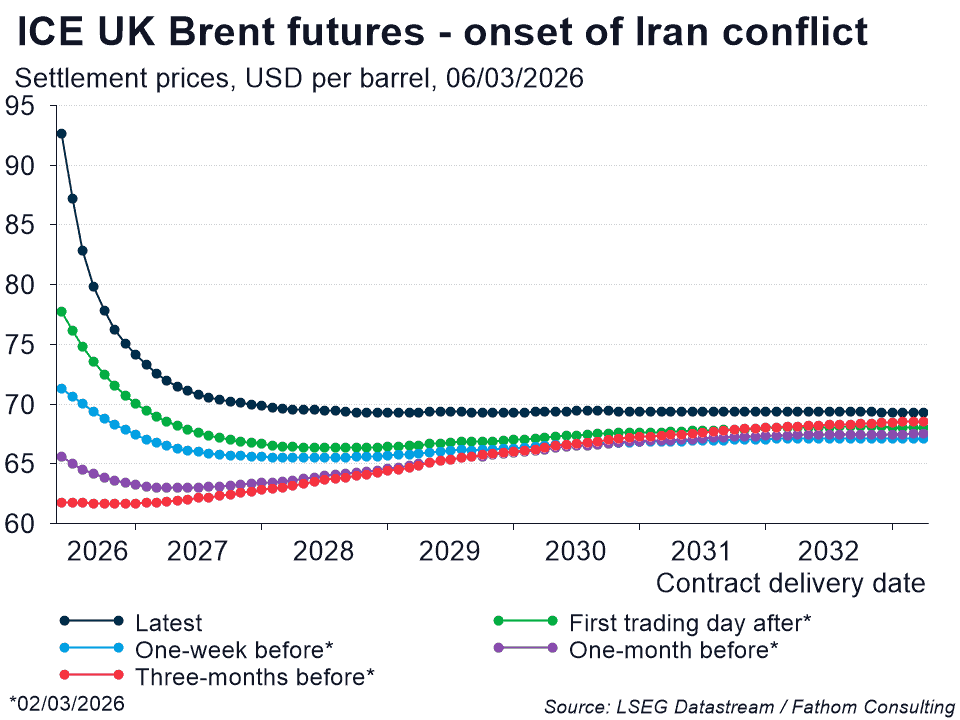
Energy prices and futures have spiked as markets price in disruption risks to global energy supplies arising from the Iran conflict and the threat of disruption both to shipping through the Strait of Hormuz and to major oil producers in the surrounding region. The near-term futures prices of oil have risen significantly in the near-term, highlighting expected short-term scarcity. While futures prices are currently above their pre-conflict levels across all futures contracts, most of this gap tails off by 2027-28, suggesting that investors expect most of the energy supply constraints to have dissipated by then, either because the conflict gets resolved or alternative solutions are found. In contrast, oil and gas prices were pushed up significantly more across all futures contracts in response to Russia’s invasion of Ukraine in 2022, indicating expectations of more prolonged supply shortages. The energy supply constraints associated with the current crisis are prompting higher inflation expectations and, as a result, investors are pricing in fewer interest rate cuts.