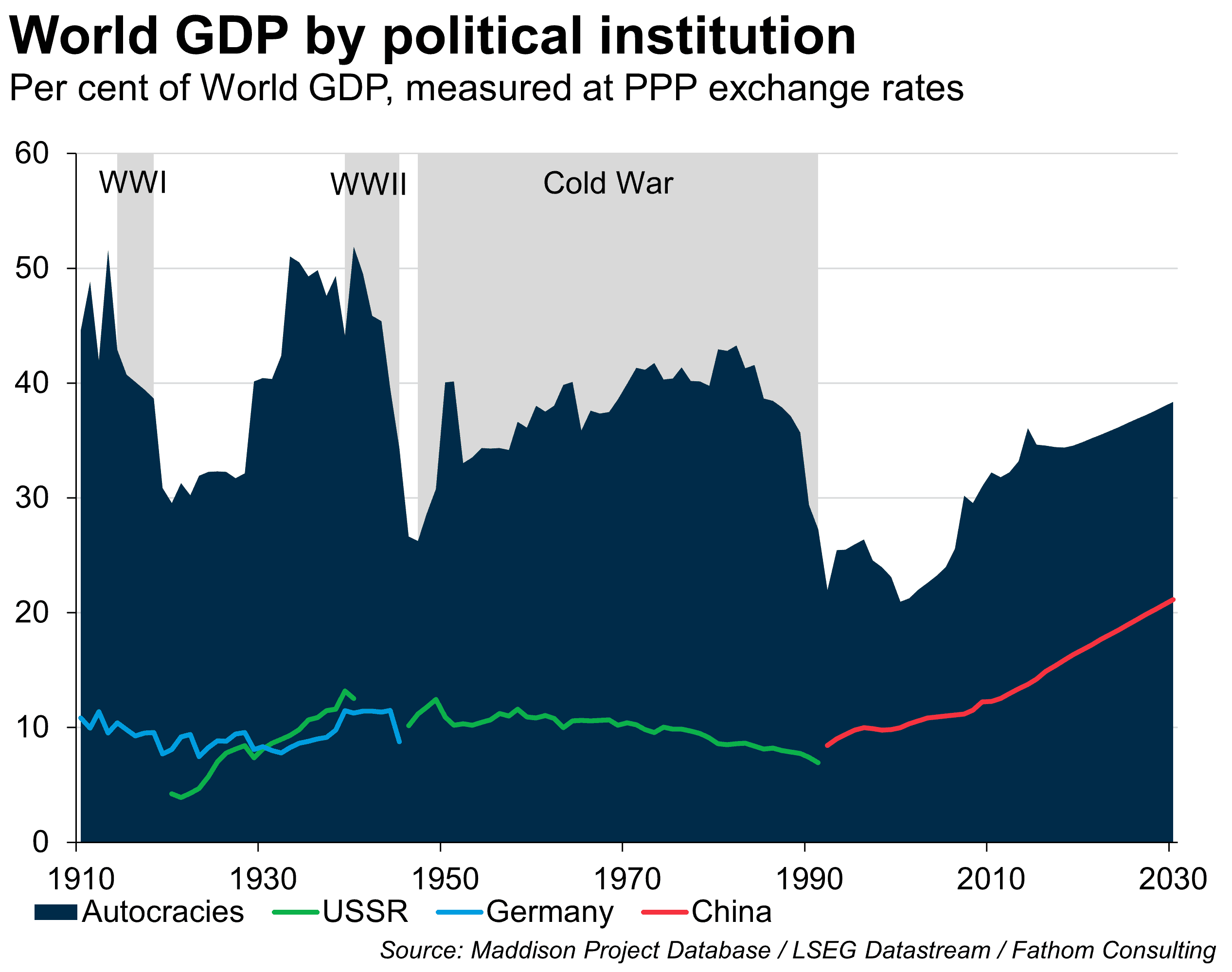
Geopolitical tensions are rising as the economic clout of large autocratic powers begins to threaten that of liberal democracies. In this environment, the risk of an economic or kinetic conflict – for example following a Chinese invasion of Taiwan – is no longer theoretical. Such a shock could fracture the global economy into competing geopolitical and geoeconomic blocs, unleashing an extended bout of economic tit‑for‑tat between the US and China and their respective allies.
This shift has profound implications for geopolitical risk insurance, both for corporates with significant overseas assets, and for the insurers who underwrite them. In a more fragmented world, the potential for foreign governments to expropriate assets on geopolitical grounds becomes a material, and hard‑to‑price, business risk. Traditional qualitative assessments or headline‑driven approaches are no longer enough; what is needed is a systematic, data‑led framework for understanding which assets are most exposed, under what scenarios, and with what potential losses.
This research note sets out Fathom’s approach to measuring and managing these risks using granular cross‑border investment and geopolitical data. Drawing on datasets available through Fathom’s China Subscription Service, the analysis maps British and American greenfield investments across jurisdictions and sectors, identifying where exposure to geopolitically motivated expropriation is greatest. The results suggest that more than 10% of overseas greenfield investments by UK and US firms could be exposed to geopolitically motivated expropriations.