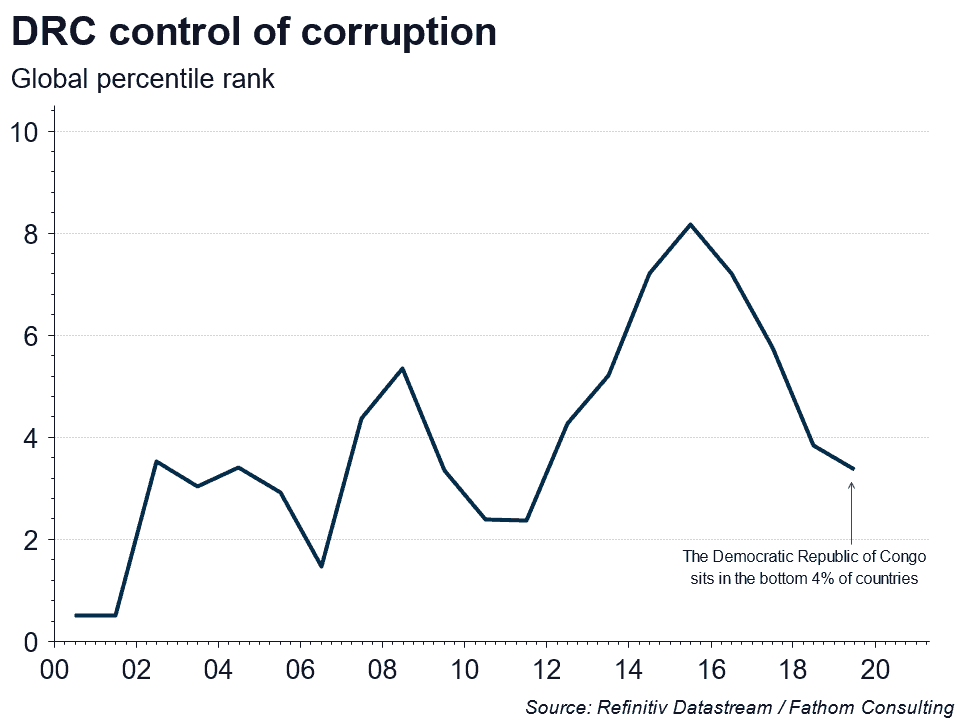
The resource curse, which is also known as the paradox of plenty, is the phenomenon whereby economies that are well endowed with natural resources experience less favourable development outcomes than their resource-poor counterparts. This, according to traditional textbooks, is due to demand for their exports triggering an inflow of income which bids up the exchange rate.
This exchange rate appreciation stifles other sectors of the economy, making it impossible to manufacture products that can compete with the cost competitiveness of manufactured imports, for example. As a consequence, resource-rich economies risk becoming overly specialised in one field, rendering them sensitive to swings in commodities prices and the economies of commodity price makers such as China, as well as becoming underdeveloped in other industries. As we examine this issue through the lens of the Democratic Republic of Congo (DRC), we can see that there is an even bigger factor at play — poor governance.
[Please click below to read the full note.]