

A sideways look at economics
These days, apparently, if you care about the environment and like Champagne you are a ‘Champagne Socialist’. At least that’s the theory of some people who did not join me for three days of sipping delicious cuvées and vintages in the elegant surroundings of Épernay. If that is the charge, I must plead guilty. Here is my defence.
It’s hard to think of a word that comes with more baggage than Champagne. To some, it symbolises class, quality, aspiration and luxury. To others, they think of opulence, excess and people who have strong opinions about boat shoes. Neither perception is especially helpful, or accurate.
Champagne is expensive, yes. A bottle of Moët & Chandon Brut Impérial can easily set you back £100 or more in a bar in Central London. It might set you back only €45 in Épernay. But still, this is not the kind of thing that most people should be drinking every day, myself included.
But there is so much more to Champagne than overpriced bottles. Yes, the power of Louis Vuitton Moët Hennessy’s (LVMH) marketing might mean that the likes of Moët, Dom Pérignon and Veuve Clicquot can command top dollar, but thousands of different Champagne marques exist, with some costing as little as €15 – €20 per bottle. Some of them are just as good.
Champagne is a significant employer and a serious industry too. The industry comprises 16,200 growers, 130 cooperatives, 370 Champagne Houses and several thousand independent producers. It employs thousands of people directly, and perhaps more than 100,000 seasonal workers each year during picking season. Not only is Champagne more accessible than you might think, but it is also a driver of economic growth in Northeast France.
The first thing you need to do when you go to Champagne is to find someone to look after your kids. This isn’t easy, or cheap. But this is why kids have grandparents. So, after giving detailed instructions to the grandparents, carefully explaining our three-day absence to our kids, my wife and I set off to the Eurotunnel at 05:45 on Friday morning. For those who don’t know it, this is a truly impressive piece of infrastructure: you drive your car (an EV, of course) onto the train in England, and a little more than 30 minutes later, you drive your car out in France, straight onto the road to Épernay. And three hours later, voilà, you are in Champagne.
One of the reasons Champagne is pricey is that it is scarce. And one of the reasons it is scarce is that to be called Champagne, it must be made in the small region of Northeast France known as Champagne. It is also made under strict rules: hand-picked grapes from select varieties, specialised grape pressing and two fermentations, to name a few. The second fermentation, inside the bottle, is where the magic happens: yeast eats sugar; yeast dies and turns into lees; lees cause bubbles and give the Champagne flavour. Sometimes Champagnes sit in the bottle with the lees for decades to get that extra je ne sais quoi. This isn’t a rushed process. Scarcity adds to the price, yes, but the reason the wine is scarce is because patience and only the best grapes and techniques are used.
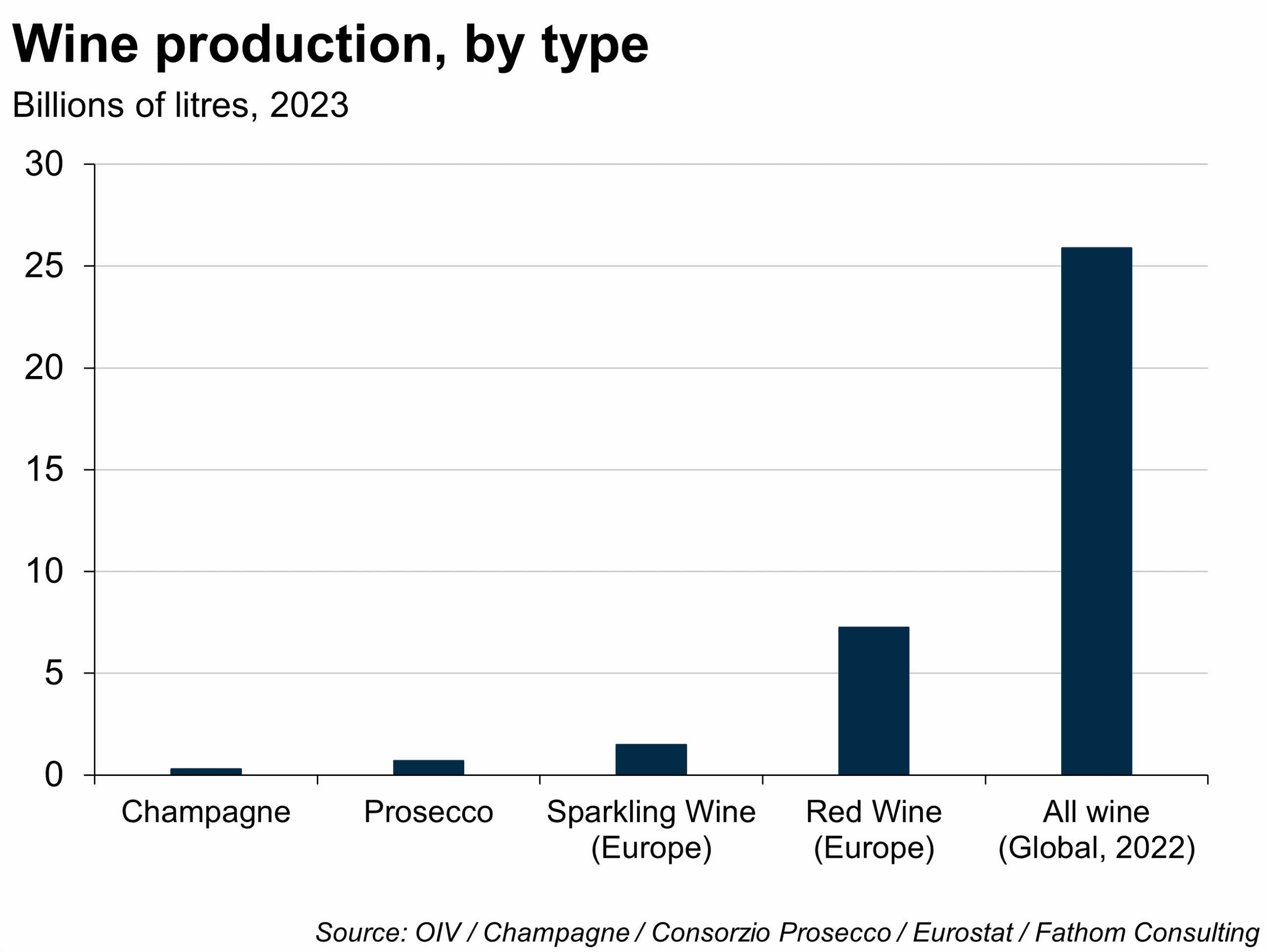
Will I be packing up my day job and moving to Champagne soon? Not so fast, since a hectare of the best grape-growing land in Champagne (called Grand Cru) will set you back €2 million. Some of the big Houses own hundreds of hectares of vineyards in Champagne (Moët & Chandon owns 1,300 hectares), yet many of them still buy grapes from smaller, independent growers who do not produce their own Champagne. Not all plots cost that much, but having a vineyard in Champagne is a serious asset. But for many, growing grapes and selling Champagne is not an easy life either. Assets are one thing, but income or salaries might not be on the same level.
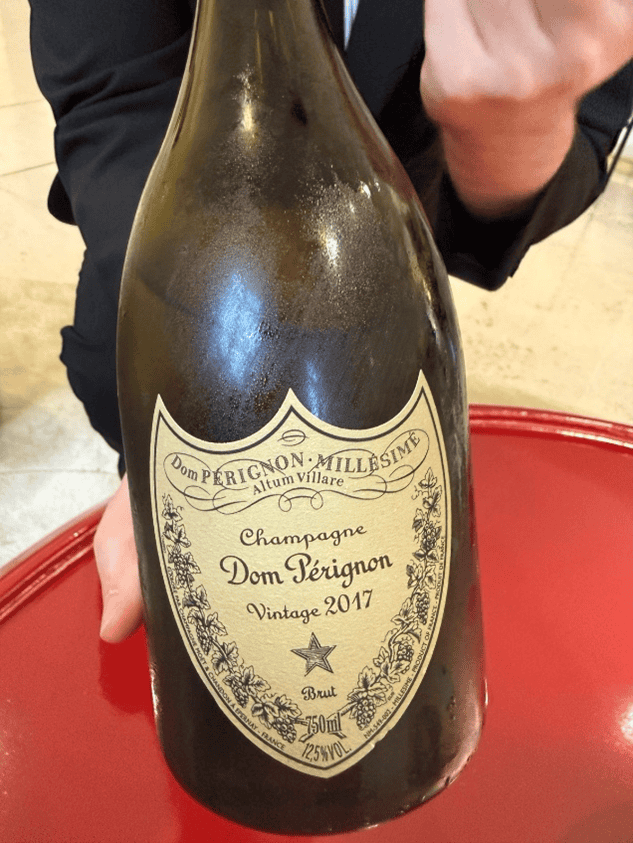
Some purists like to stay away from the big brands and big Houses, which often focus on a house style or brand created by blending grapes from different years. But most of the big Houses also produce Vintage wines, which are made using grapes from a particular year, like Dom Pérignon. The latest bottle of that (the Dom Pérignon Vintage 2017) will set you back at least €240. A glass at the Moët & Chandon bar on the Avenue de Champagne costs a mere €55! Soft. Complex. Bliss. Will I be doing this again soon? No. Was it worth every penny? Yes.

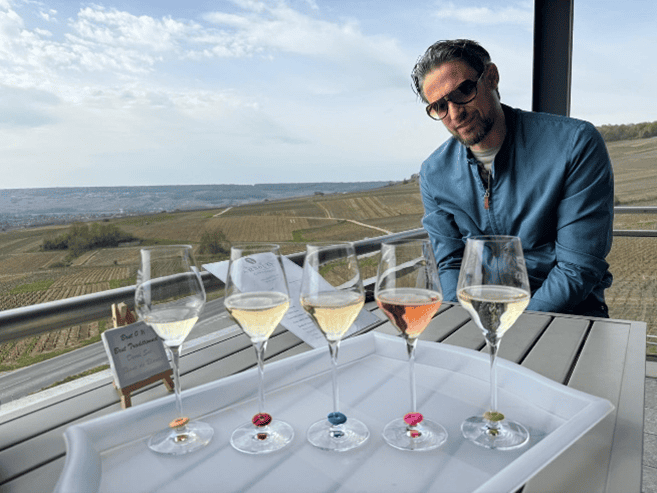
I prefer the smaller Houses myself and to be honest, I even preferred a Blanc de Blancs from a wine cooperative (which costs €21 per bottle) to a 2012 vintage that we tried at one of the big Houses (and €130 per bottle). Perhaps that is my flawed palate, or perhaps it goes to show that some wines are better than their price suggests, and some are not. It might sound ridiculous, but whether you like the Champagne also depends on your mood, when you will be drinking it and the food you will be pairing it with. I counted that we tasted 47 different Champagnes last weekend, including nine with Ludovic, the charismatic sommelier of the Pierre Mignon Champagne house. We’ve certainly trained our palates and parted with some hard-earned cash.

Yes, our trip was expensive and indulgent. But it probably didn’t cost much more than a weekend spa retreat in England or an all-inclusive trip to Türkiye, even when we include the price of the 24 bottles we brought back with us. Buying bottles in Champagne is not just buying alcohol; it is buying future evenings, stories and fun at home, with the cost per bottle less than it would be per glass if we were drinking in a pub or restaurant in London. In London, £100 buys you a bottle. In Épernay, €100 gets you context, cellars, winemakers, history, stories, comparisons and the confidence to know what wine you actually like.
Champagne might look decadent from a distance, but it’s an economic and cultural success story. In my opinion that should be celebrated, not frowned upon. Perhaps that makes me a capitalist and not a socialist after all, even if I do worry about climate change. If you know, you know. And the French prove my point: despite having just 0.8% of the world’s population, 2.7% of the world’s GDP, and facing global competition for their prized and scarce wine, they still consume more than 43% of all Champagne produced. Respect.
“I drink Champagne when I’m happy and when I’m sad. Sometimes I drink it when I’m alone. When I have company I consider it obligatory. I trifle with it if I’m not hungry and drink it when I am. Otherwise, I never touch it – unless I’m thirsty.” – Lily Bollinger
More by this author
How to write TFiF (when you don’t have time)